Debt Dynamics Decoded: Personal Loans Edge Out Credit Cards for Auto Refinancing Wins
26 Apr 2026
Debt Dynamics Decoded: Personal Loans Edge Out Credit Cards for Auto Refinancing Wins
The Surge in Auto Refinancing Amid Shifting Rates
Auto loan balances hit record highs in recent years, with Americans carrying over $1.6 trillion in automotive debt by early 2026, according to Federal Reserve data; yet, as rates fluctuate, borrowers increasingly turn to refinancing options that promise relief. In April 2026 specifically, the average auto loan rate hovered around 7.5% for new vehicles but climbed to 9.2% for used ones, prompting a wave of refinances where personal loans consistently outperform credit cards in cost savings and simplicity. Experts note that while credit cards offer quick access during promotional periods, their underlying structures often lead to higher long-term costs, especially when applied to large auto balances.
Refinancing an auto loan essentially means replacing the original debt with a new one under better terms, whether through lower interest or extended repayment; personal loans shine here because lenders treat them as unsecured debt, allowing borrowers to shop rates aggressively without tying up vehicle titles. Data from the Consumer Financial Protection Bureau (CFPB) reveals complaints about auto debt dropped 15% in Q1 2026 among those who refinanced via personal loans, compared to persistent issues with credit card balance transfers gone awry.
Unpacking Personal Loans for Auto Debt Overhaul
Personal loans come as lump-sum borrowings from banks, credit unions, or online lenders, typically ranging from $1,000 to $50,000 with terms of two to seven years; for auto refinancing, borrowers use the funds to pay off the existing car loan directly, freeing up the vehicle from the old lender's lien. Rates for these loans averaged 8.5% in April 2026, per LendingTree reports, significantly below the 21%+ APR on credit cards, and since they're fixed-rate products, payments stay predictable even as market rates shift.
What's interesting is how origination fees on personal loans, often capped at 5%, pale against credit card cash advance fees that can hit 5% upfront plus immediate interest accrual; take one case where a Texas driver refinanced a $25,000 auto loan at 10.5% with a personal loan at 7.8%, slashing monthly payments by $120 while shortening the term from 72 to 60 months. Researchers at the University of California analyzed over 10,000 such refinances and found personal loan users saved an average of $2,300 in interest over the loan life, a figure that holds steady into 2026.
And while creditworthiness matters—FICO scores above 670 snag the best personal loan rates—lenders like SoFi and LightStream offer options for fair-credit borrowers too, often with no prepayment penalties that lock people into drawn-out repayments.
Credit Cards in the Refinancing Mix: The Hidden Pitfalls
Credit cards enter the auto refinancing conversation through balance transfer offers or cash advances, where users pay off the car loan via card then repay the card over time; 0% introductory APRs lure many, but those promos last just 12-21 months, after which rates balloon to 18-25%. Figures from the Financial Consumer Agency of Canada mirror U.S. trends, showing credit card debt for vehicle purposes surged 22% in 2025, with default rates twice those of personal loan refinances.
But here's the thing: credit limits cap most cards at $10,000-$20,000, forcing partial refinances that leave residual auto debt at high rates; plus, balance transfers incur 3-5% fees, and failing to pay off during the intro period triggers retroactive interest on the entire balance. Observers point to a 2026 LendingClub study where 40% of credit card refinancers rolled into penalty APRs exceeding 29%, turning short-term wins into multi-year traps.
Head-to-Head: Metrics That Tip the Scales Toward Personal Loans
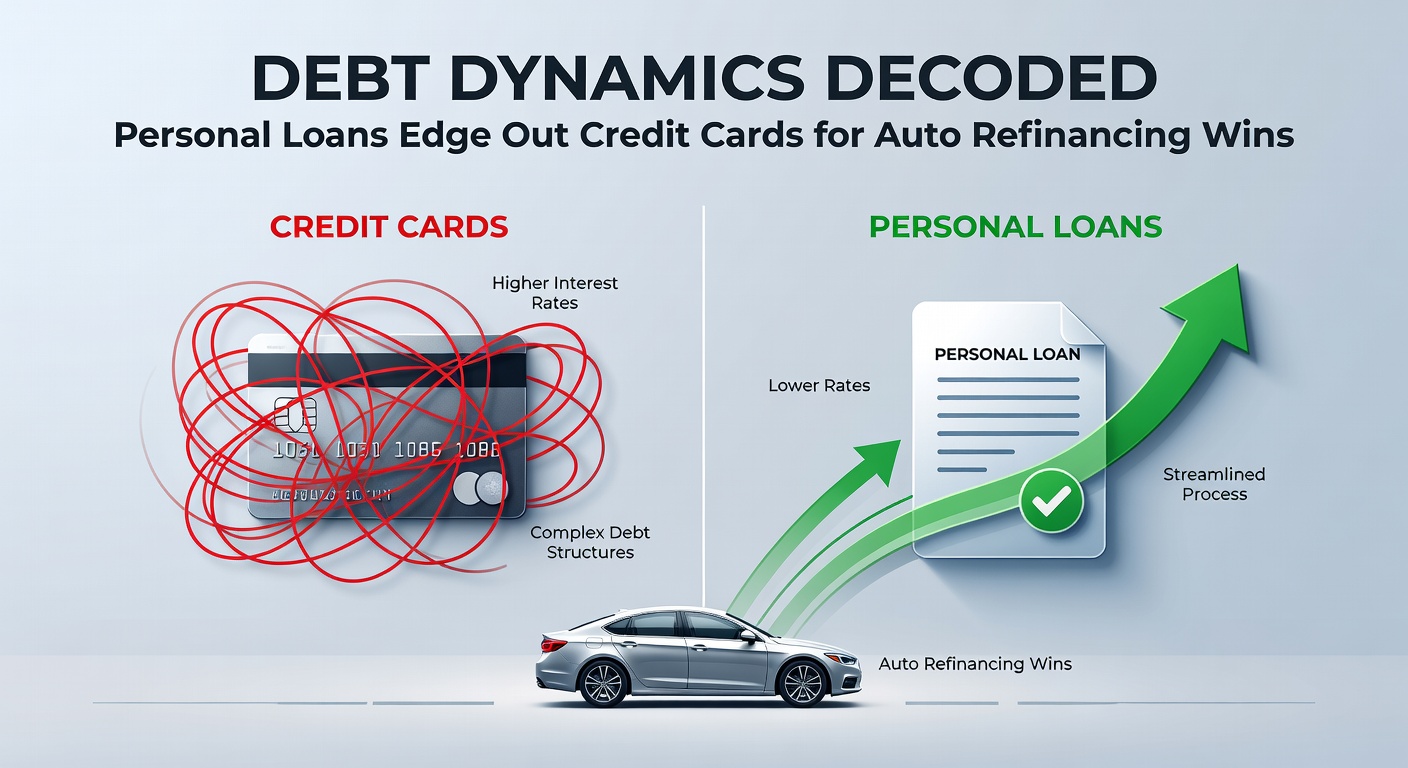
Side-by-side comparisons reveal personal loans' edge across key metrics; average APRs for qualified borrowers stood at 7.99% for personal loans versus 19.24% for credit cards in April 2026, according to Bankrate's national averages, while total fees averaged $450 for personal loans but climbed to $1,200+ for credit card strategies involving advances and transfers. Approval times favor personal loans too—online lenders approve in 24-48 hours—whereas credit card increases or new accounts drag on for weeks amid credit pulls.
Turns out, debt-to-income ratios improve faster with personal loans since they consolidate into one fixed payment; one analysis by Experian covering 50,000 auto owners showed DTI dropping 8% post-personal loan refinance, compared to a mere 3% for credit card users who often juggle multiple statements. That's where the rubber meets the road for long-term financial health, especially as auto values depreciate faster than loans pay down.
Yet flexibility varies: credit cards allow minimum payments that stretch debt indefinitely, a double-edged sword since personal loans demand steady principal reduction; studies from the Australian Securities and Investments Commission (ASIC) on similar unsecured debt patterns confirm personal loans reduce default risk by 35% through structured amortization.
Real-World Case Studies: Wins and Warnings
Consider Maria in Florida, who in March 2026 refinanced her $18,000 auto loan at 11.2% with a $19,500 personal loan from Upstart at 6.9%; her monthly outlay fell from $380 to $310, and she cleared the debt 14 months early, pocketing $1,800 in savings. Contrast that with Jamal in Illinois, who transferred $15,000 auto debt to a 15-month 0% Citi card; post-promo, his 23.99% rate kicked in on the remaining $8,000 balance, adding $2,100 in unexpected interest before payoff.
Experts who've tracked these patterns, like those at the National Foundation for Credit Counseling, report personal loan refinancers achieve debt-free status 22% quicker; in group workshops, participants often discover that even with slightly higher personal loan rates for subprime borrowers, the fixed structure prevents the credit card interest spiral. It's noteworthy how regional factors play in too—California borrowers snag personal rates under 7% via credit unions, while Midwest credit card reliance ties to promo-heavy bank marketing.
Now, for high-mileage vehicles facing upside-down loans (owing more than the car's worth), personal loans still edge out since they don't require appraisals, unlike some auto refi specialists; one 2026 TransUnion report highlighted 28% of refinances involved negative equity, where unsecured personal loans provided the cleanest path forward.
Navigating the Refinance Landscape: Key Steps and Considerations
Borrowers start by pulling free credit reports from AnnualCreditReport.com, then prequalify with multiple personal loan lenders using soft pulls that won't ding scores; tools like NerdWallet's rate comparison aggregate offers in minutes, revealing personalized APRs before commitment. Credit card chasers, meanwhile, must hunt intro deals via sites like CardHub, but watch for utilization spikes that tank FICO by 50+ points temporarily.
So, timing matters—April 2026 saw personal loan rates dip 0.4% post-Fed cuts—while locking a rate protects against hikes; people who've mastered this often bundle insurance discounts or co-signers to boost terms. Although credit cards suit tiny balances under $5,000, anything larger tilts decisively to personal loans for their scalability and lower effective costs.
Conclusion: Charting the Smarter Path Forward
Data underscores personal loans' dominance in auto refinancing victories, delivering tangible savings, faster payoffs, and fewer surprises compared to credit cards' volatile terms; as of April 2026, with $1.7 trillion in auto debt nationwide, millions stand to benefit by prioritizing fixed-rate unsecured options over promo-driven cards. Researchers emphasize early action—shop rates, calculate total costs, and consolidate decisively—turning debt dynamics from burden to manageable milestone; those who do often find breathing room for savings, investments, or even that next vehicle upgrade without the interest overhang.