26 Jul 2026
How Career Milestones Influence Borrowing Decisions Across Credit Lines, Installment Loans, and Secured Financing
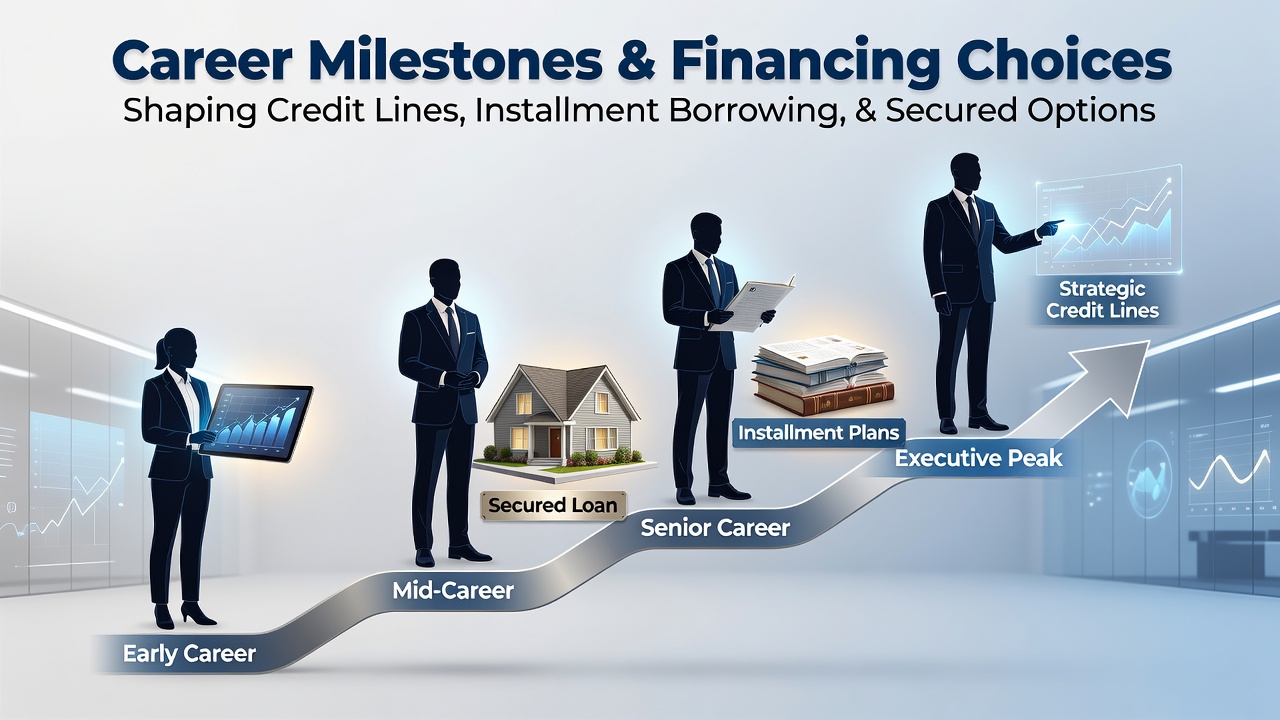
Career milestones often align with shifts in financial needs that prompt individuals to evaluate options among revolving credit lines, fixed installment borrowing, and asset-backed secured financing. Data from labor market studies indicate that entry-level positions and early promotions coincide with increased reliance on unsecured credit lines for immediate expenses, whereas mid-career advancements frequently lead to installment products for larger planned outlays. Observers note that these patterns emerge because income stability and future earning projections change at each stage, altering how borrowers match product features to their circumstances.
Early Career Stages and Preference for Credit Lines
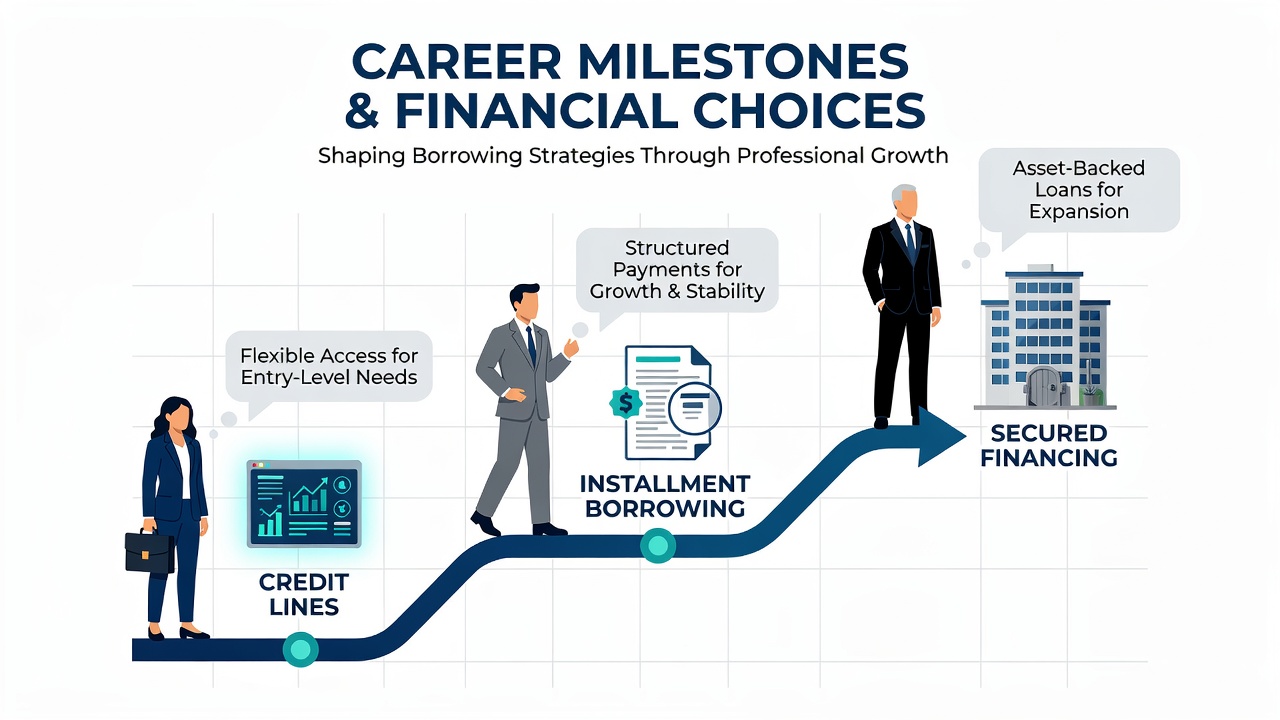
Individuals entering the workforce typically encounter variable income and limited credit history, which directs attention toward credit lines that provide flexible access without fixed repayment schedules. Federal Reserve analyses of consumer credit data show revolving balances rising sharply in the first five years post-graduation, as entry-level salaries cover living costs while unexpected expenses accumulate. Those who secure initial raises often maintain credit line usage for short-term smoothing rather than committing to installment structures that require predictable cash flow. Research from the Bank of Canada reveals similar trends in younger cohorts, where credit line utilization peaks before age thirty and then declines as employment tenure lengthens.
Mid-Career Advancements Prompting Installment Borrowing
Promotions and role expansions around ages thirty-five to forty-five bring steadier compensation and clearer career trajectories, prompting many to turn toward installment borrowing for targeted goals such as vehicle purchases or professional development. Figures released in July 2026 by the European Central Bank highlighted a measurable uptick in personal loan originations among this demographic, coinciding with documented salary jumps in professional sectors. Installment products offer defined terms and predictable payments that align with improved budgeting capacity, while credit lines remain secondary for smaller or uncertain needs. One study of Australian household data found that borrowers in this phase reduced revolving debt loads by an average of eighteen percent after moving into installment arrangements tied to specific milestones like advanced certifications or equipment acquisitions.
Transitions Involving Secured Financing During Peak Earning Years
Establishment of homeownership or property investment tends to occur alongside career stability in the forties and early fifties, shifting focus toward secured financing options that leverage accumulated equity or down-payment capacity. Mortgage and home equity products carry lower rates because collateral reduces lender risk, and data from the U.S. Bureau of Labor Statistics indicate that households with ten or more years in the same occupation file for such loans at higher rates than those with frequent job changes. Career milestones such as executive appointments or business ownership transitions further encourage secured borrowing, since asset values can offset larger sums needed for expansion or relocation. What's notable is how these choices interact with existing credit profiles, as longer employment histories improve approval odds and terms.
Job Changes and the Return to Flexible Credit Structures
Employment disruptions, whether voluntary or involuntary, frequently reverse prior preferences by increasing uncertainty around cash flow and prompting renewed use of credit lines for bridging periods. Academic papers from university labor economics departments document that workers experiencing mid-career switches maintain higher revolving balances for up to two years afterward, delaying installment commitments until new roles stabilize. Secured financing sees reduced uptake during these intervals because lenders scrutinize employment continuity, leading borrowers to favor unsecured options until records reflect consistent income again. Yet patterns also show that those who negotiate severance packages or transition directly into comparable positions can accelerate back toward installment products sooner than expected.
Later Career Planning and Debt Consolidation Strategies
Approaching retirement, many individuals reassess outstanding obligations to align with fixed-income projections, often consolidating multiple credit lines and installment loans into secured products when home equity remains available. Canadian household surveys indicate that pre-retirees in stable careers favor rate reductions through secured refinancing over maintaining higher-cost revolving debt. Career milestones such as pension vesting or final promotions provide the predictability needed to commit to longer-term secured structures, while earlier-stage flexibility gives way to emphasis on preservation of assets. Research indicates that these shifts occur gradually, with borrowing activity tapering overall as career endpoints near.
Conclusion
Across documented datasets, career milestones consistently correlate with measurable adjustments in product selection among credit lines, installment borrowing, and secured financing. Early flexibility needs give way to structured repayment during advancement phases, followed by collateral-based options during asset accumulation, with reversals possible during transitions. External sources such as Federal Reserve publications and reports from the European Central Bank continue to track these movements, offering ongoing insight into how employment timelines shape borrowing pathways without prescribing individual outcomes.