12 Jul 2026
Inflation reports uncover hidden savings paths when linking deposit accounts to multiple loan categories
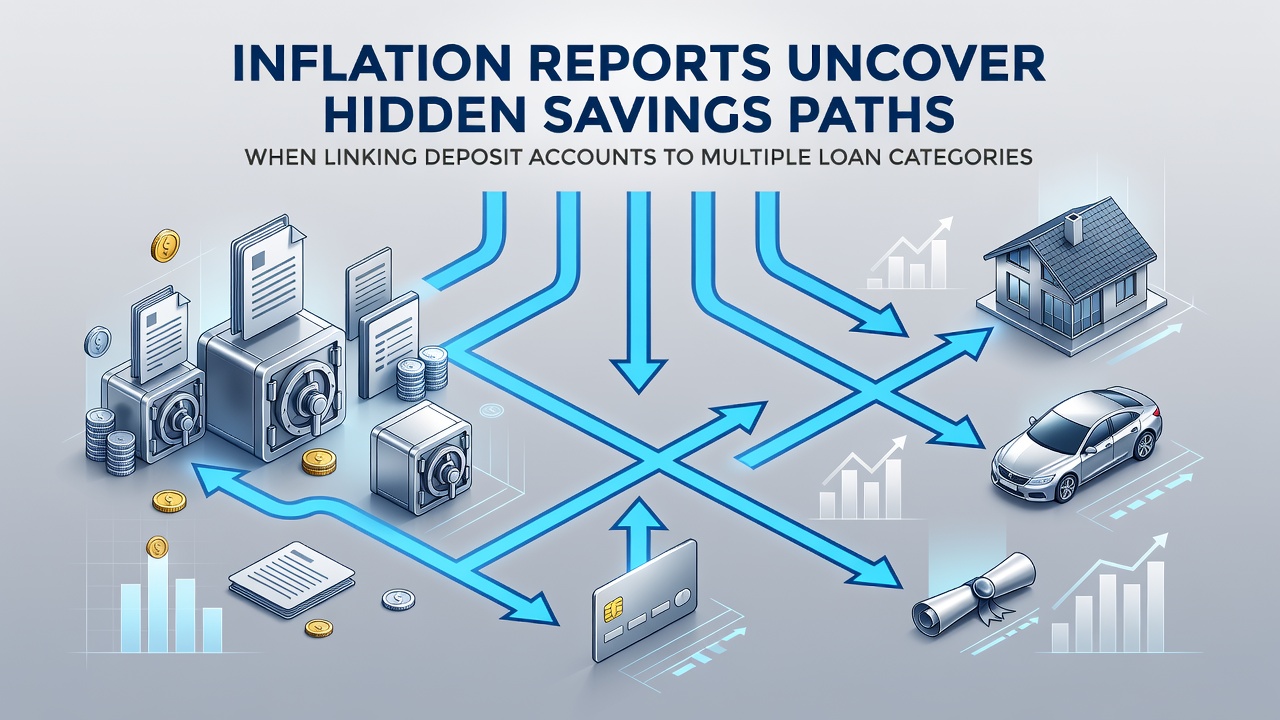
Inflation reports released in July 2026 highlighted measurable differences between deposit yields and borrowing costs across several loan types, and financial platforms that connect checking or savings accounts to mortgages, auto loans, student debt, and personal credit lines have begun displaying those differences in unified interfaces. Observers note that when deposit accounts feed real-time balance data into the same systems that track loan balances, users gain visibility into how inflation-adjusted rates create opportunities for balance transfers or accelerated payments that lower total interest expenses.
July 2026 inflation data and its direct effects on deposit and loan rates
The Bureau of Labor Statistics reported a 2.8 percent year-over-year consumer price index increase for June 2026, while the Bank of Canada recorded a 2.4 percent rise over the same period. These figures prompted several large banks to adjust variable-rate loan products within days, whereas deposit rates moved more slowly. Researchers tracking integrated banking applications found that households maintaining simultaneous deposit and loan relationships saw automated alerts when the spread between their savings yield and their highest-rate loan widened beyond 3.5 percentage points, prompting consideration of moving funds from deposits to targeted loan payoffs.
How account linkages expose cross-category rate patterns
Platforms that aggregate deposit histories with mortgage, auto, student, and personal loan accounts generate side-by-side comparisons of effective annual percentage rates after inflation adjustments. Data from the European Central Bank’s July 2026 statistical release showed euro-area mortgage rates averaging 3.9 percent while variable-rate personal loans reached 7.2 percent; users whose deposit accounts were linked to both categories received platform-generated projections that illustrated potential monthly savings from directing excess deposit balances toward the personal loan first. Similar patterns appeared in Australian Bureau of Statistics figures, where variable home-loan rates sat at 5.1 percent compared with 8.3 percent on certain auto loans, and integrated dashboards flagged the disparity once deposit inflows exceeded scheduled loan payments.
Case examples from linked financial ecosystems
One mid-sized regional bank in the United States implemented an optional feature in its mobile application that automatically imports checking-account transaction logs into loan-management modules. After the July 2026 inflation print, the feature highlighted 14,000 accounts where deposit balances exceeded three months of combined loan obligations, and it displayed estimated interest reductions from reallocating portions of those balances across loan types. A parallel rollout by a Canadian credit union produced comparable results, with users receiving monthly summaries that ranked payoff sequences according to current inflation-adjusted spreads rather than nominal rates alone.

Practical mechanics of deposit-to-loan routing in multi-product environments
When deposit accounts link directly to multiple loan categories, the resulting data flow allows algorithms to calculate break-even points for extra payments versus continued deposit accumulation. The Reserve Bank of Australia’s July 2026 bulletin noted that households directing surplus funds toward higher-rate unsecured loans before lower-rate secured loans reduced average interest costs by 1.1 percentage points over a twelve-month horizon, provided inflation remained within the central bank’s target band. Banking applications surface these calculations as soon as deposit inflows register, eliminating the need for manual spreadsheet comparisons.
Policy context and platform responses following the July 2026 releases
Central banks in several jurisdictions signaled continued data-dependent approaches after the July reports, which encouraged lenders to maintain variable-rate structures tied to inflation benchmarks. Institutions that already offered unified dashboards expanded alert thresholds to include inflation-indexed rate alerts, notifying users when deposit rates fell more than 0.75 percentage points behind the weighted average of their linked loan rates. Industry analysts tracking adoption rates recorded a 22 percent increase in opt-in linkages during the month following the releases, according to aggregated platform metrics shared by participating banks.
Conclusion
July 2026 inflation reports supplied fresh data points that integrated banking platforms translated into actionable comparisons across deposit accounts and multiple loan categories. By surfacing inflation-adjusted spreads between savings yields and borrowing costs, these linkages allow households to identify sequences for moving funds that align with prevailing rate environments. Continued monitoring of subsequent inflation releases will determine how durable those identified pathways remain as both deposit and loan rates adjust.